Morning Briefing: Midterm Reckoning in America, Historic ANC Decline in South Africa, and Fresh Crises Across Africa and China
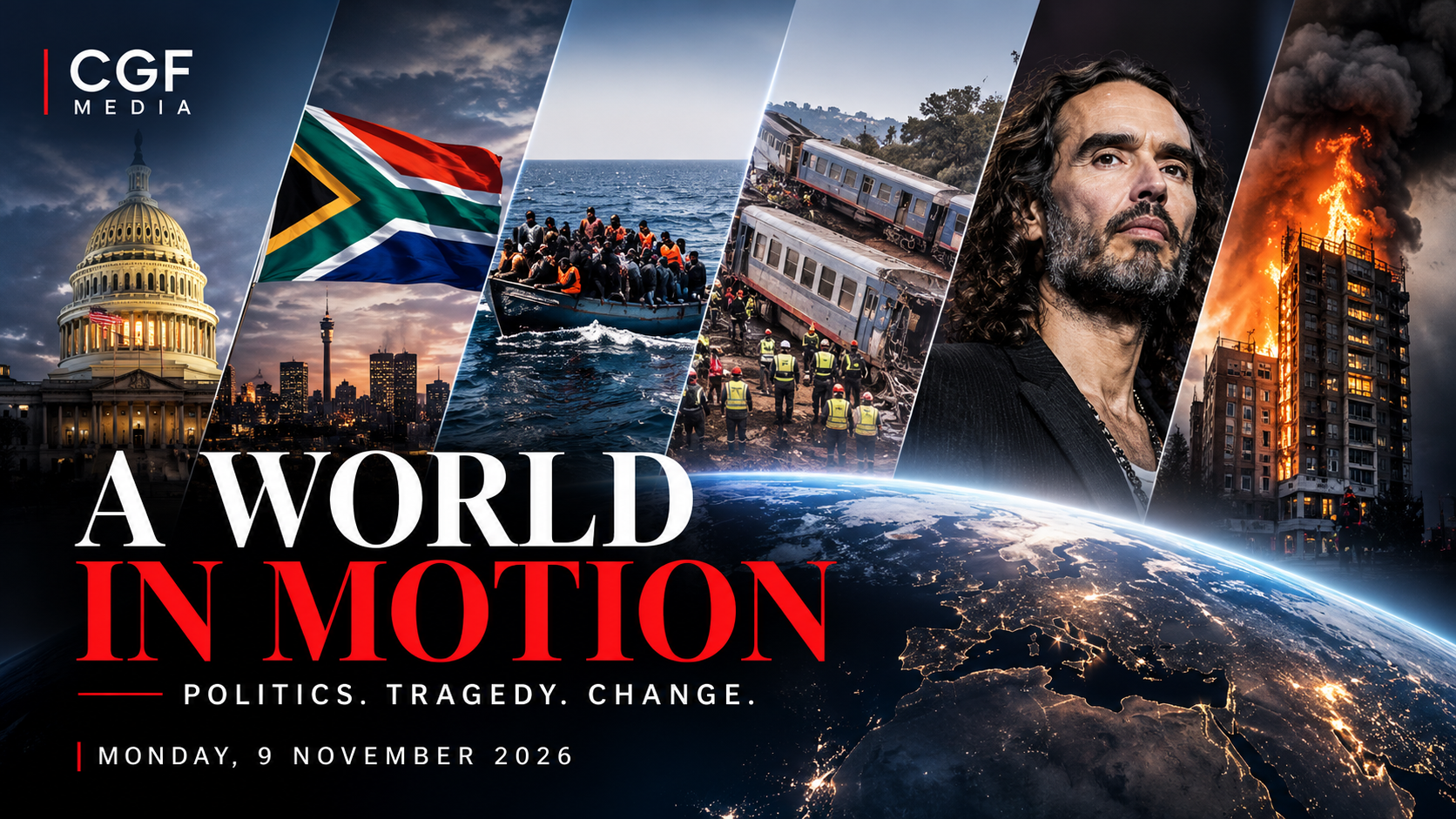
As Monday dawns on 9 November 2026, the world digests a political earthquake in Washington, the ANC’s sharpest local-election fall in democratic South Africa, deadly migrant and rail disasters in West and North Africa, Russell Brand’s sentencing day in London, and a rising death toll from a Chinese high-rise fire.
The first hours of Monday, 9 November 2026, arrived with a familiar but intensified rhythm of global news. In Washington the aftershocks of last Tuesday’s midterm elections continued to dominate. In South Africa the Independent Electoral Commission’s final local-government tallies confirmed a historic retreat for the African National Congress. Off the coast of Senegal and on the rails south of Cairo, fresh tragedies underscored the human cost of migration and infrastructure strain. In London a celebrity courtroom drama reached its sentencing stage, while in northern China the death toll from a Sunday apartment fire continued to climb. Together these stories formed the morning’s clearest picture of political realignment, economic pressure, and everyday risk across four major regions.
In the United States the scale of the Democratic victory is still being absorbed. Democrats secured majorities in both the House and the Senate, flipping seats in long-standing Republican strongholds including Texas, Kansas, Ohio and others. Early projections showed the party on course for one of its largest House gains in decades. Exit polls and subsequent analysis pointed to voter anger over the cost of living, the ongoing Iran conflict and the pace of immigration enforcement. On Sunday night President Donald Trump sat for a lengthy 60 Minutes interview in which he acknowledged that his administration’s deportation policy had been “too tough” and may have contributed to Republican losses. He suggested openness to some form of accommodation for long-term undocumented residents who work and pay taxes, while still prioritising the removal of people convicted of serious crimes. The remarks landed against the backdrop of a personnel move recorded earlier: Trump elevated immigration hardliner Stephen Miller to White House chief of staff, replacing Susie Wiles. The combination of electoral defeat, public concession and internal hardline reinforcement has set the tone for the final two years of the administration and for the new Democratic-led Congress that will take office in January 2027. Oversight of immigration agencies, defence policy and spending priorities are already emerging as early flashpoints.
Across the Atlantic, South Africa’s municipal results delivered a parallel, if differently configured, political message. The ANC finished with roughly 30.76 percent of the national vote, a drop of nearly fifteen points from its 2021 showing and the party’s weakest performance since the end of apartheid. The Democratic Alliance placed second at 24.64 percent, while Jacob Zuma’s uMkhonto weSizwe Party entered the local arena strongly with nearly 10 percent. The Economic Freedom Fighters and ActionSA also secured meaningful shares. The practical consequence is a sharp rise in hung councils; more than 130 municipalities lack a single-party majority and will require coalition bargaining. In the major metros the picture is especially fragmented: the DA leads in Johannesburg, Tshwane, Ekurhuleni, Cape Town and Nelson Mandela Bay, while the MK Party tops the poll in eThekwini. President Cyril Ramaphosa and ANC officials have spoken of accepting the result with humility and of the need for coalition discipline. For voters who cited service delivery failures—water, electricity, housing—the outcome is both a protest and a new governing reality that will test every major party’s capacity to negotiate.
Further north, two acute humanitarian and safety stories broke into the same news cycle. Off the Senegalese coast near Kébémer, a migrant pirogue sank on the dangerous Atlantic route toward Spain’s Canary Islands. The Interior Ministry initially reported 21 bodies recovered and one survivor; later statements from the state news agency and a human-rights group raised the confirmed death toll to at least 34, with an unknown number still missing. Most of the recovered victims were Senegalese. President Bassirou Diomaye Faye issued condolences and restated the government’s commitment to disrupt smuggling networks while expanding local opportunities. The incident fits a grim pattern: hundreds of deaths have already been recorded on the same route in 2026. Spanish authorities on El Hierro have separately declared an emergency after a recent surge in arrivals.
In Egypt a rear-end collision between two passenger trains roughly 50–75 kilometres south of Cairo killed at least seven people and injured more than 100, according to the Health Ministry. One train travelling from Giza toward Fayoum struck the rear of a stationary Cairo-to-Aswan service near Al-Ayyat, causing multiple carriages to derail and overturn. President Abdel Fattah el-Sisi ordered a rapid investigation and accountability for any negligence. The crash occurred in the same general area as Egypt’s deadliest rail disaster of 2002. Emergency services deployed dozens of ambulances; rail traffic on the Cairo–Upper Egypt line was suspended while wreckage was cleared. Both the Senegalese and Egyptian tragedies highlight persistent vulnerabilities—unsafe migration routes and ageing rail infrastructure—that national authorities continue to struggle to close.
In the United Kingdom the morning’s most watched domestic story is legal rather than electoral. Russell Brand, convicted last Thursday at Southwark Crown Court of one count of rape and three counts of sexual assault, is due to be sentenced today. The jury’s verdicts followed a four-week trial; Brand was remanded in custody immediately. The trial judge has already indicated that a significant custodial term is inevitable. The case has renewed debate about accountability for high-profile figures and about the culture of the entertainment industry in which the offences occurred more than a decade ago. Separately, Remembrance Sunday commemorations drew large public gatherings across the country on 8 November, while the Met Office warned of dense fog affecting travel in southern England and the Midlands into Monday morning.
China’s principal hard-news item is the rising toll from a fire that broke out on Sunday afternoon in a mixed-use high-rise in Taiyuan’s Yingze District, Shanxi province. Initial reports listed five deaths among 38 people taken to hospital; by Monday morning state media had raised the confirmed death toll to 14. The fire, which began around 5 p.m. local time, was extinguished within roughly two hours and search-and-rescue operations concluded by 8:30 p.m. The building contained training institutions, vacant floors and a hotel. Authorities have not yet announced a cause. The incident adds to a series of deadly high-rise fires in recent years that have prompted official campaigns on building safety and fire-code enforcement.
Economic and corporate developments also feature in Chinese and global coverage. October consumer prices rose 0.7 percent year-on-year while producer prices increased more sharply, influenced in part by external commodity pressures. The ten-year government bond yield touched a record low as equity weakness drove demand for safer assets. Separately, Nvidia announced an independent investigation into whether chief executive Jensen Huang had been the target of a foreign intelligence effort after he publicly acknowledged an extramarital affair. The probe, ordered by the board, has drawn attention in both U.S. and Chinese media given the company’s central role in artificial-intelligence hardware and ongoing technology-export tensions.
These stories do not exist in isolation. The U.S. midterm result is already being read by allies and adversaries as a constraint on executive power and as a possible opening for legislative bargaining on immigration and spending. South Africa’s fragmented local landscape will test whether coalition politics can deliver the service improvements voters demanded. The migrant and rail disasters in Africa remain reminders of the human stakes behind policy failures on borders and infrastructure. Brand’s sentencing will be watched as a marker of how courts treat historic sexual offences involving public figures. And the Taiyuan fire, like similar incidents before it, keeps the focus on regulatory enforcement in rapidly urbanising China.
By mid-morning in Lagos, London, Washington and Beijing the same headlines were circulating with local emphasis and additional detail. Death tolls, final seat counts and sentencing outcomes can still shift. What is already clear is that 9 November 2026 opened with a set of interlocking political, humanitarian and safety stories that will shape public debate for the days and weeks ahead.