Inside Anioma Marriage Traditions: The Meaning of Family Rites, Marital Vows and the Controversy Over Blood Oaths
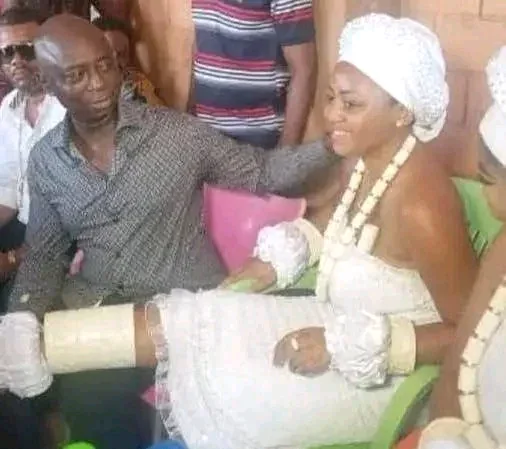
The renewed public conversation surrounding Nollywood actress Regina Daniels and her estranged husband, Nigerian politician Ned Nwoko, has brought renewed attention to the rich cultural heritage of the Anioma people of Delta State, particularly their traditional marriage practices and the solemn commitments associated with marriage.
The couple's highly publicised union in 2019 attracted widespread attention because of their substantial age difference, Nwoko's established family and the public interest surrounding the traditional ceremony. Years later, their marital dispute has continued to generate debate about love, family expectations, cultural obligations and the role of tradition in modern relationships.
Beyond the celebrity headlines, however, lies a broader cultural question:
What do Anioma marriage rites actually entail, and what evidence exists for claims that a bride must take a blood oath to remain faithful to her husband?
Understanding these questions requires distinguishing documented cultural practices from local beliefs, individual family customs and claims that have not been independently established.
Who Are the Anioma People?
The Anioma people are an Igbo-speaking ethnolinguistic population predominantly associated with Delta North in southern Nigeria. The region encompasses communities in the Aniocha, Ndokwa, Ika and Oshimili areas, including Asaba and Ogwashi-Uku.
The name Anioma is commonly associated with these four areas and is also interpreted as meaning "good land" in Igbo. The region is culturally diverse, with variations in language, history, traditional institutions and customary practices from one community to another.
Historical and cultural studies describe Anioma society as one in which family relationships, community identity, ancestral heritage and traditional ceremonies have played important roles. Marriage, in particular, has historically been regarded as more than a private arrangement between two individuals; it also establishes relationships between their families and lineages.
Although many communities share cultural similarities, Anioma should not be treated as a single community with one identical set of customs. The practices of an Ibusa family, for example, should not automatically be presented as the exact practices of every family in Ogwashi-Uku, Idumuje-Ugboko, Asaba or other Anioma communities.
Why Traditional Marriage Is Important in Anioma Culture.
Traditional marriage has long carried considerable social significance among Anioma communities. It represents the joining of two individuals while creating a relationship between their families.
Parents and senior relatives may participate in discussions concerning the proposed union, the suitability of the relationship, family expectations and the customary requirements for the ceremony.
Historically, marriage also had implications for lineage, inheritance, kinship and the responsibilities expected of spouses. These expectations were shaped by the customs of individual communities and the religious beliefs and social circumstances of the families involved.
Research on Anioma and neighbouring communities has documented the importance of marriage as a cultural institution. A 2023 report published by The Nation, titled "Why Anioma Traditional Marriage Is Unique," examined the significance of traditional marriage among the Enuani people. Other cultural accounts describe how introductions, family negotiations, bride-price discussions and symbolic ceremonies form part of traditional marriage in particular communities.
Today, traditional marriage practices continue to evolve. Christianity, formal education, urbanisation, changing attitudes towards gender roles and modern ideas about individual consent have influenced how families organise and interpret marriage ceremonies.
The Traditional Marriage Process: From Introduction to Wedding Ceremony
There is no single ceremony that accurately represents every Anioma community. Nevertheless, documented accounts of traditional marriage among some Anioma groups illustrate several recurring stages.
1. Introduction of the prospective spouse
In some communities, the process begins when a woman introduces her prospective husband to her parents or senior family members.
This meeting allows the families to become acquainted and establishes that the relationship is being considered for marriage. It may also provide an opportunity for relatives to discuss the couple's intentions and expectations.
Among the Ibusa people, a traditional introduction is known as Iku-Aka. A cultural account published by Ibusa.net describes it as a meeting through which both families become familiar with one another and acknowledge the possibility of a future marriage.
2. Family discussions and customary requirements
Following the introduction, the families may discuss the requirements for the traditional wedding. These can include bride-price, drinks, kola nuts, other gifts and arrangements for the ceremony.
The specific requirements vary according to community and family custom. They should not be assumed to be identical throughout Anioma.
Bride-price is traditionally understood within the wider framework of marriage negotiations and family recognition. It should not be interpreted as the purchase of a woman or as a transfer of ownership over her.
3. Presentation of drinks and kola nuts
In some Anioma marriage ceremonies, drinks and kola nuts are presented as part of the formal proceedings.
These items can serve as expressions of hospitality, respect and recognition between the families. Kola nuts, in particular, have a wider cultural significance across several Igbo-speaking communities, where their presentation and breaking may accompany greetings, prayers or formal gatherings.
The order and exact meaning of these practices depend on the community concerned.
4. Negotiation and payment of bride-price
Bride-price negotiations may involve representatives of both families discussing and agreeing on the customary requirements.
In the Ibusa account, a stage known as Izu-Ashia involves traditional negotiation before the bride-price is accepted.
This illustrates the role that family representatives can play in traditional marriage. However, the details documented for Ibusa should not automatically be attributed to every Anioma community.
5. Recognition of the marriage and symbolic rites
The ceremony may conclude with the formal recognition of the couple as husband and wife, accompanied by prayers, blessings, symbolic acts, food, music and dancing.
Some families incorporate palm wine or other drinks into the proceedings. The significance of a particular act must be understood within its local cultural context rather than assumed to have one universal meaning.
The traditional ceremony can therefore be both a celebration and a public acknowledgement of the responsibilities the couple and their families associate with marriage.
Marital Oaths: What Do They Mean?
The idea of a marital oath has become particularly controversial in discussions surrounding the Daniels-Nwoko marriage.
In a broad cultural and religious sense, an oath is a solemn declaration made to affirm a promise, obligation or commitment. Depending on the community and belief system, an oath may invoke God, a spiritual authority, ancestors or other sacred elements as witnesses to a person's declaration.
Marriage ceremonies can also include promises of fidelity, commitment, respect and responsibility. Such promises may be expressed through spoken declarations, prayers, symbolic gestures or other customary acts.
However, it is important to distinguish a conventional marital promise from an oath believed to carry spiritual consequences.
A particular family may attach a strong religious or spiritual meaning to a ceremony, but that does not establish that every Anioma bride participates in the same rite or that all Anioma communities interpret it identically.
There is also a difference between describing what a community believes an oath represents and claiming that the oath has a supernatural effect.
The former can be investigated through cultural testimony and historical research; the latter should not be presented as an objectively established fact without credible evidence.
Can a Marriage Oath Prevent a Woman From Leaving Her Husband?
The belief that an oath can bind a person to a relationship may be rooted in particular spiritual or religious worldviews. For people who hold such beliefs, breaking an oath may be associated with spiritual consequences, family disapproval or fear of the unknown.
However, a belief in the consequences of an oath is not the same as independently established evidence that a ritual can physically or supernaturally prevent someone from leaving a marriage.
Marriage customs and personal beliefs should also be distinguished from legal rights. In Nigeria, customary practices operate within a wider legal framework, and no cultural claim should automatically be interpreted as removing a person's legal protections or freedom to seek help.
Where a marriage involves threats, intimidation, coercion or fear of harm, the circumstances should be considered seriously rather than dismissed as a cultural matter.
The Role of Women, Family Elders and Community Authority
Family elders traditionally play important roles in many Anioma communities, including advising couples, facilitating marriage negotiations and helping families resolve disagreements.
Their involvement may provide guidance and preserve cultural knowledge passed down through generations. At the same time, the expectations placed on couples can vary considerably, particularly as younger generations develop different views about relationships, gender roles and personal independence.
Women may also be active participants in preserving cultural traditions, organising marriage ceremonies and passing customary knowledge to younger family members.
Understanding these roles requires recognising that Anioma women and families are not a single group with identical beliefs. Individuals may embrace some traditions, reinterpret others or reject practices they consider inconsistent with their values.
Regina Daniels and Ned Nwoko: What Can Be Established?
The marriage of Regina Daniels and Ned Nwoko has generated public discussion about age differences, family expectations and the challenges that can arise in highly publicised relationships.
Their relationship has also become part of wider online conversations about traditional marriage and alleged spiritual obligations. However, the public interest surrounding their marriage should not be mistaken for proof that a particular cultural ritual took place.
Any claim that either party participated in a blood oath, or that such an oath explains developments in their relationship, would require reliable, independently verifiable evidence.
Similarly, the existence of marital disagreements does not establish that a cultural practice caused them. Responsible reporting must separate confirmed statements, documented events and attributed allegations from speculation about private matters.
The couple's experience may prompt broader questions about marriage and cultural expectations, but it cannot, on its own, represent the marriage customs of an entire ethnic group.
How Modern Life Is Influencing Anioma Marriage Traditions
Anioma marriage customs, like those of many Nigerian communities, continue to evolve in response to social, economic and religious changes.
Christianity has influenced the way some families approach traditional ceremonies, while formal education, urbanisation and migration have brought people from different backgrounds into contact with one another.
Many couples now combine customary marriage rites with church weddings or civil ceremonies. Others simplify traditional proceedings to suit their financial circumstances, personal preferences or family arrangements.
Changing attitudes towards gender equality and individual consent have also encouraged discussions about the expectations placed on husbands and wives.
These developments do not necessarily mean that traditional marriage is disappearing. Instead, they demonstrate that cultural practices can be maintained, adapted and interpreted differently by successive generations.
Why Cultural Verification Matters in Reporting
The growing popularity of online entertainment and celebrity commentary makes cultural verification particularly important.
A claim may circulate widely on social media without being supported by historical records, reliable community sources or direct testimony. When such claims concern an ethnic group, repeating them without verification can create stereotypes and misrepresent the people involved.
For publishers and journalists, responsible cultural reporting involves consulting credible cultural historians, knowledgeable community representatives, relevant academic studies and reliable first-hand accounts.
It also requires identifying the specific community associated with a practice rather than presenting a local custom as universal across Anioma.
Where evidence is incomplete, writers should clearly state what remains unverified. This approach allows readers to understand the controversy without confusing allegations with established cultural facts.
Conclusion: Preserving Tradition While Separating Facts From Speculation
Anioma marriage traditions reflect a rich cultural heritage in which family relationships, customary negotiations, ceremonial exchanges and community participation have historically played important roles.
Although many communities share similarities, their customs are not identical. Practices documented in one locality should therefore be understood within that community's cultural context.
The controversy surrounding alleged blood oaths highlights the importance of examining cultural claims carefully, particularly when they involve marriage, fidelity and women's personal autonomy.
While individual families may hold particular spiritual beliefs, the claim that every Anioma bride must take a blood oath has not been sufficiently established and should not be presented as a universal tradition.
Regina Daniels and Ned Nwoko's highly publicised relationship has brought renewed attention to these questions, but their personal circumstances should not be used as proof of an entire people's customs.
Ultimately, preserving cultural heritage and promoting accurate reporting are not opposing goals. Both depend on understanding traditions in their proper context, respecting the communities associated with them and distinguishing documented practices from allegations and speculation.