What the unveiling establishes
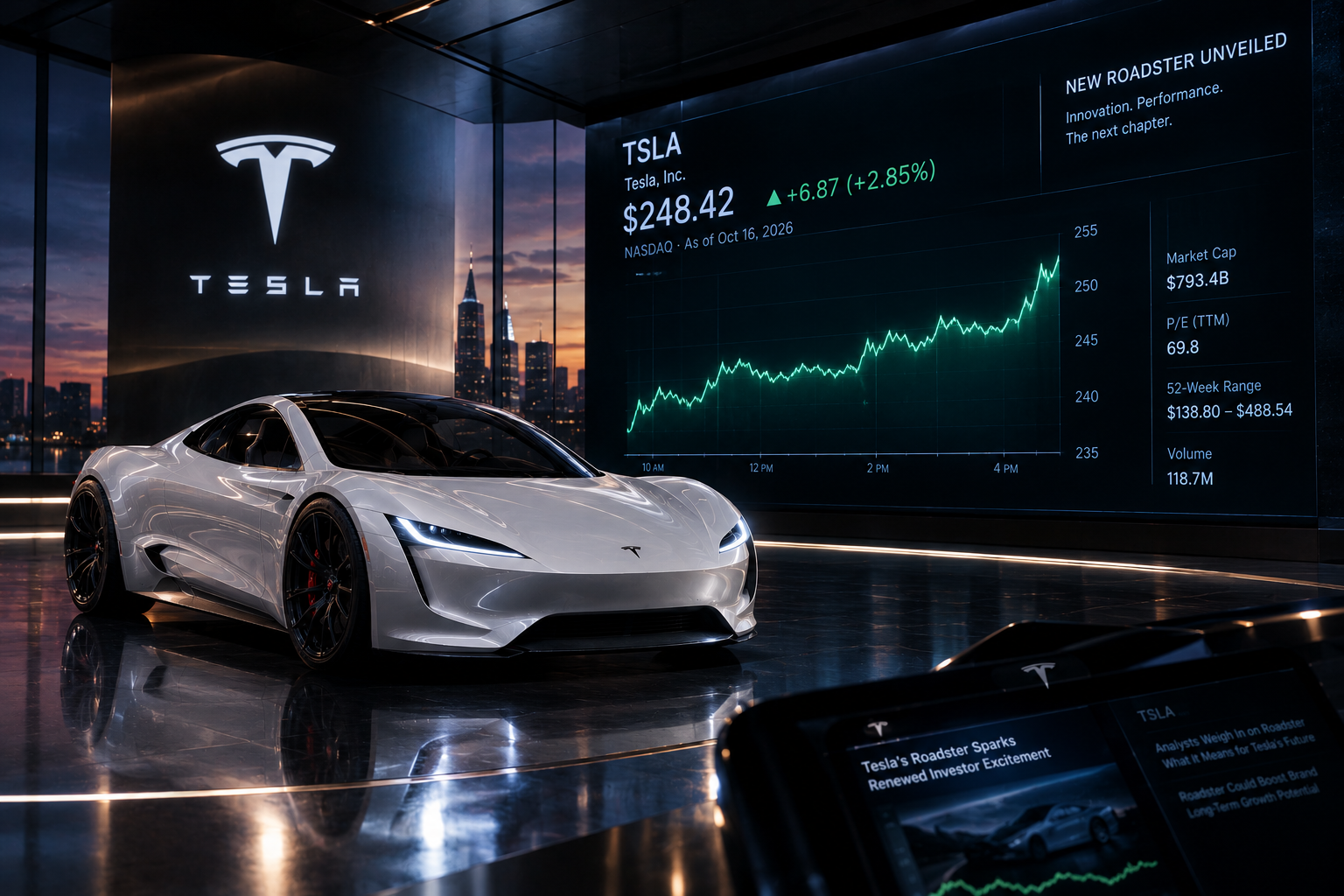
Tesla unveiled the redesigned Roadster in Waco, Texas, on October 15, 2026, with Reuters reporting a planned 2028 production start—not immediate availability. [5] [9] The engineering proposition combines battery-electric propulsion, fan-generated downforce and compressed-air thrust, but the supplied material consists principally of manufacturer descriptions and launch reporting rather than independent validation. [1] [3] [6]
Battery: specifications without validation
Specialist outlet Not a Tesla App reports two motors, rear-wheel drive, an 800–1,000-volt architecture and approximately 150 kWh of battery capacity using new 4680 cells designed for sustained power; these remain reported specifications, not independently verified measurements. [3] Its supplied excerpt does not establish cell chemistry, usable capacity, pack mass, cooling design, discharge limits or a charging curve, preventing a defensible assessment of sustained output or charging time. [3]
Range evidence is inconsistent: Not a Tesla App says Tesla has not issued an official figure, whereas Teslarati attributes a greater-than-300-mile range to Tesla’s Rocket specification; neither supplied excerpt presents a certification result or independent range test. [3] [10]
Acceleration: separating targets from tests
Not a Tesla App reports a live, thruster-assisted 0–60 mph run of 0.81 seconds, while Teslarati lists claimed production targets below 1.6 seconds for Performance and below 0.59 seconds for Rocket. [3] [10] Calculated from those times, assuming a true standing start, the corresponding average longitudinal accelerations are approximately 3.4g for the reported demonstration and greater than 4.6g for the Rocket target—not measured peak loads. [3] [10]
Neither excerpt supplies timing methodology, rollout allowance, surface conditions or repeat-run data, so these numbers cannot support a controlled comparison with independently tested production cars. [3] [10]
Downforce without road speed
Tesla describes fans extracting air beneath a ground-sealed body, generating downforce even when stationary, supplemented by active wings; its strongest claim is sufficient suction to hold the vehicle upside down. [1] This is explicitly a manufacturer claim: the supplied page provides no downforce measurements, fan-power requirement, seal-clearance tolerance or independent inverted demonstration. [1]
Tesla also identifies magnesium, titanium, carbon fibre and a fixed seat position as mass-reduction measures, but supplies no quantified weight savings in the excerpt. [1]
Thrusters: capacity is not endurance
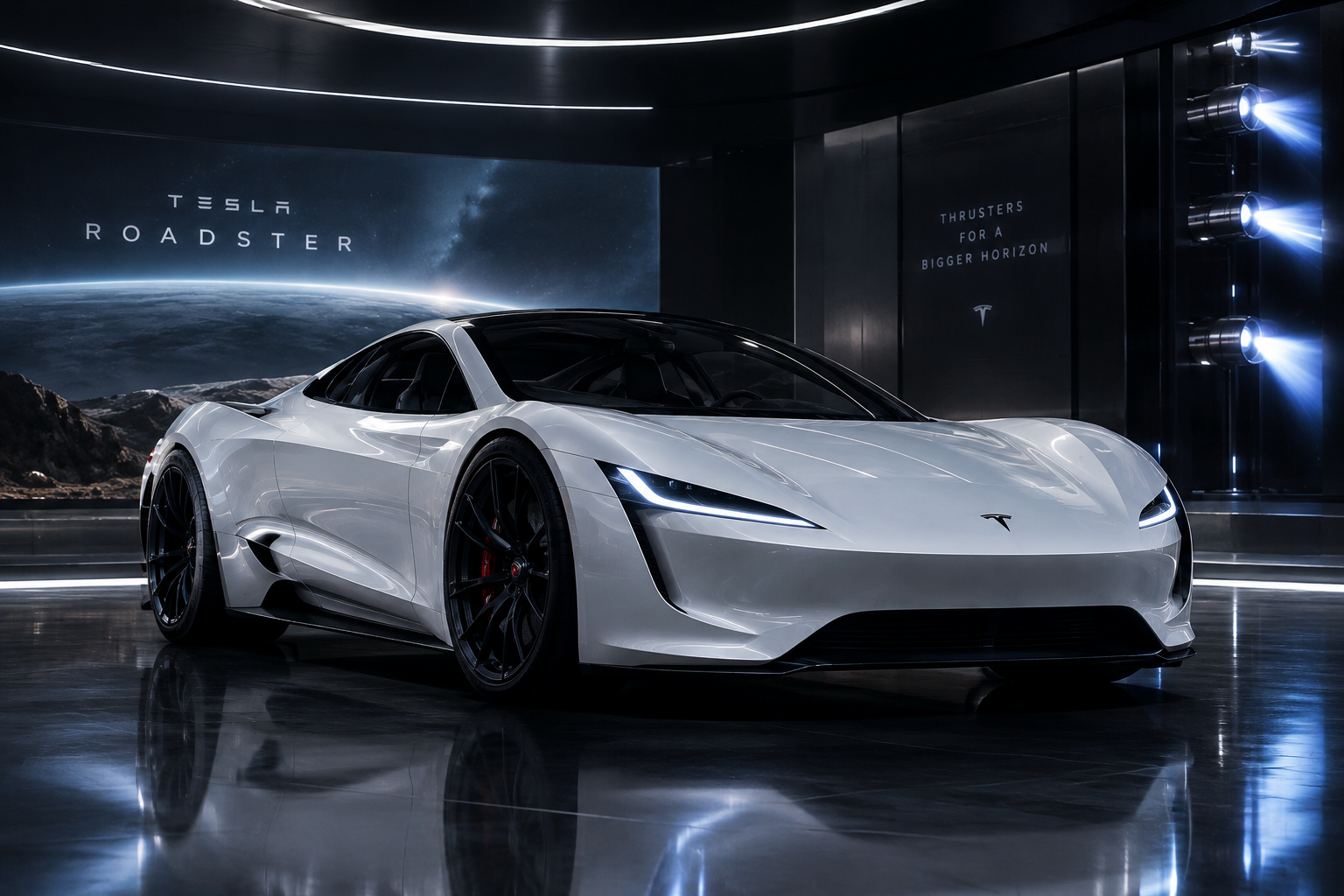
According to TechCrunch, engineering executive Lars Moravy described ten thrusters connected to 600 litres of compressed air, with a rechargeable tank; CBS reports that high-pressure gas boosters lifted the vehicle at the launch. [6] [5] However, the supplied reporting does not specify tank pressure, the reference conditions for that volume, nozzle performance, thrust duration or recharge time, leaving usable impulse and repeatability unquantifiable. [6] Reported hovering and flips therefore should not be read as evidence of sustained flight capability. [4]
Speed discrepancies and the verification gap
Teslarati reports a Rocket top-speed claim exceeding 230 mph, while TechCrunch quotes commentator Marques Brownlee referencing 380-plus mph; these are not directly comparable test results, and the supplied evidence cannot reconcile them. [10] [6] The defensible conclusion is narrower than the spectacle: the launch establishes an ambitious engineering programme, not independently verified production performance. [9]